


You might notice your website traffic dropping without any clear reason. Rankings that were stable last month suddenly shift. Leads slow down, even though nothing major changed on your end.
This is where most businesses realize they haven’t checked the health of their website in a long time. An SEO audit is not just a technical task. Regular SEO audits are essential, and working with a professional SEO service can make the process more effective.
The real question is not whether you should audit your site, but how often you should do it. The answer depends on your website type, size, and how actively you manage it.
What Is an SEO Audit and Why Does It Matter
An SEO audit is a structured review of your website to identify issues that affect visibility in search engines. It covers technical setup, content quality, and backlink profile.
If done regularly, it helps you catch problems before they impact your rankings.
Why regular audits make a difference
Search engines constantly update how they evaluate websites. At the same time, your competitors keep improving their content and strategy. If your site stays static, it slowly loses ground.
Regular audits help you:
- Identify technical issues early
- Keep content aligned with search intent
- Improve user experience
- Maintain steady traffic growth
What industry data shows
According to HubSpot, businesses that regularly update and optimize their content see significantly higher organic traffic growth compared to those that do not.
Research from Ahrefs also shows that most pages lose rankings over time if they are not updated or improved. This is often called content decay.
How Many Times Should You Audit Your Site For SEO

There is no single schedule that works for every website. The right frequency depends on how complex your website is and how often it changes.
A practical benchmark
- Small websites: every 4 to 6 months
- Medium websites: every 2 to 3 months
- Large or high-traffic websites: every month
This is not a rigid rule, but it gives a clear starting point.
What actually affects your audit frequency
Several factors determine how often you should run audits:
- Number of pages on your site
- Frequency of content updates
- Competition in your industry
- Dependence on organic traffic
A small static website does not need the same level of monitoring as an e-commerce store with hundreds of products.
SEO Audit Frequency Based on Website Type
Small business websites
If your website has fewer pages and does not change often, auditing every 4 to 6 months is usually enough.
Focus on:
- Basic technical issues
- Local SEO optimization
- Core service pages
Service-based websites and agencies
These websites depend heavily on lead generation. Auditing every 2 to 3 months helps maintain performance.
Focus on:
- Conversion pages
- Keyword targeting
- Internal linking
Content-driven websites
Blogs and publishing websites require more attention because content performance changes frequently.
- Run light audits every month
- Perform a deep audit every quarter
Focus on updating old content and improving underperforming pages.
E-commerce websites
E-commerce sites deal with constant changes in products, categories, and inventory. Monthly audits are necessary.
Focus on:
- Duplicate content
- Crawl efficiency
- Product page optimization
Large or enterprise websites
These websites require continuous monitoring with structured monthly audits. Automation tools play a key role here.
Types of SEO Audits You Should Schedule
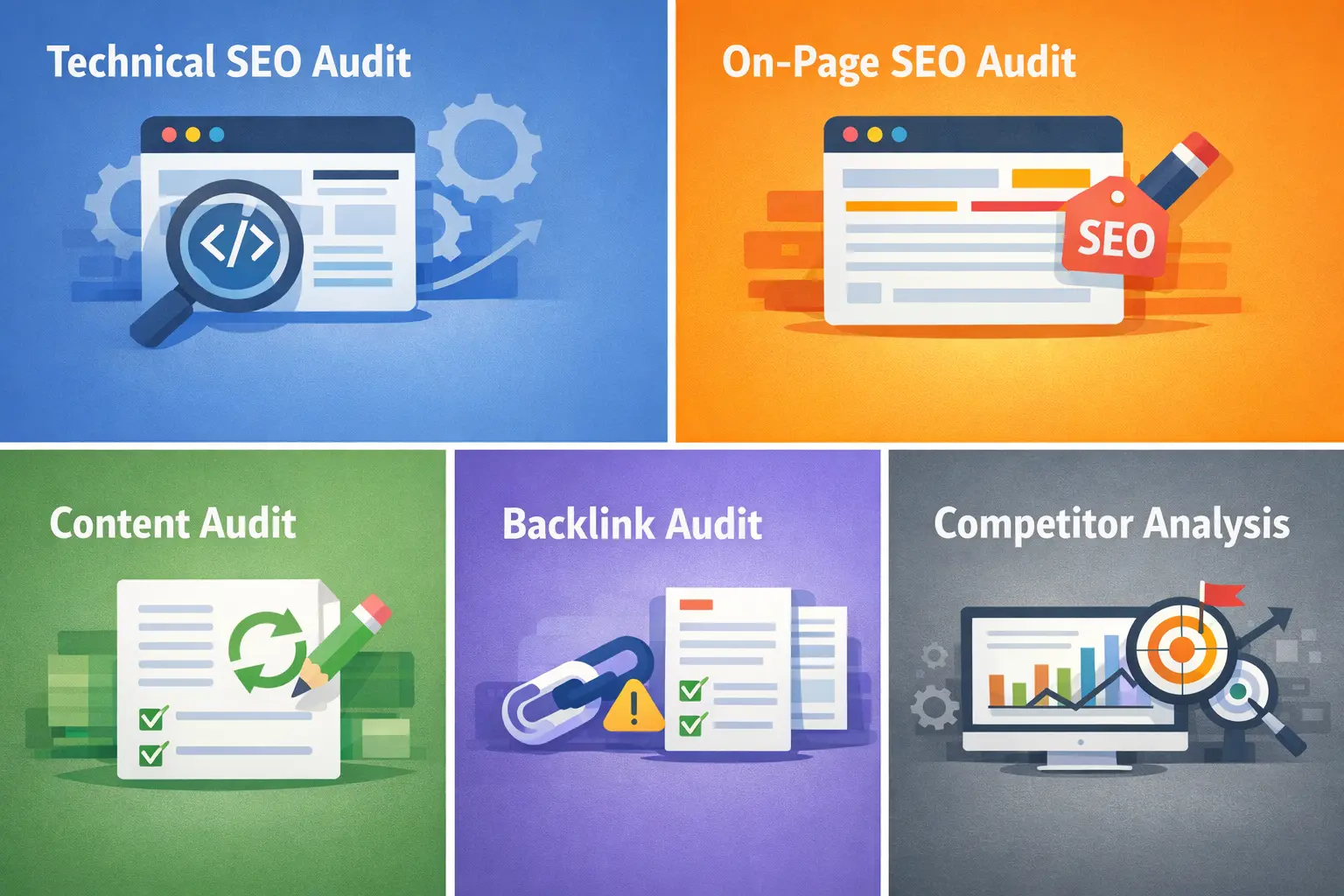
Technical SEO audit
This ensures your website can be properly crawled and indexed.
Key checks include:
- Crawl errors
- Indexing issues
- Page speed and Core Web Vitals
- Mobile usability
On-page SEO audit
This focuses on how well your content is optimized.
Check for:
- Title tags and meta descriptions
- Keyword relevance
- Content structure
Content audit
Content performance changes over time. Some pages lose traffic while others gain.
You should:
- Update outdated content
- Merge similar pages
- Remove thin or low-value pages
Backlink audit
Backlinks influence your site’s authority. Poor-quality links can harm rankings.
Check for:
- Toxic links
- Lost backlinks
- New opportunities
Competitor analysis
Understanding what competitors are doing helps you stay competitive.
Look at:
- Keyword gaps
- Content strategy
- Backlink profiles
Signs You Should Audit Your Website Immediately
Sometimes you should not wait for your scheduled audit.
Watch for these signs:
- Sudden drop in organic traffic
- Rankings disappearing for key keywords
- Important pages not getting indexed
- Decline in leads or conversions
- Recent website redesign or migration
If you notice any of these, an audit should be your first step.
SEO Audit Checklist (Quick Overview)
Technical checks
- Crawlability and indexability
- Broken links and redirects
- Page speed performance
On-page checks
- Proper keyword usage
- Content structure and readability
- Internal linking
Off-page checks
- Backlink quality
- Authority trends
Tools That Make SEO Audits Easier
Using the right tools makes the audit process faster and more accurate.
- Google Search Console helps track indexing and search performance
- Google Analytics provides user behavior insights
- SEMrush offers site audits and keyword tracking
- Ahrefs is useful for backlink analysis
Common Mistakes to Avoid
Many businesses either ignore audits or approach them incorrectly.
Avoid these mistakes:
- Auditing too rarely and missing problems
- Running audits but not fixing issues
- Ignoring small technical errors
- Not tracking results after making changes
An audit only adds value if you take action based on it.
Check Also: Best SEO Companies In The USA 2026
Building a Sustainable SEO Audit Routine
A consistent process works better than occasional deep checks.
To build a routine:
- Set a fixed audit schedule
- Combine manual checks with tools
- Track improvements after each audit
- Focus on high-impact fixes first
Over time, this approach keeps your website stable and competitive.
Your Rankings Are Dropping, Here’s What to Fix
Most traffic loss doesn’t happen overnight. It builds slowly through unnoticed technical issues, outdated content, and missed optimization opportunities. Without a proper audit, these problems keep growing in the background. A structured SEO audit shows exactly where your website is underperforming and what needs to be fixed to recover and improve your rankings.
Conclusion
There is no perfect number when it comes to how often you should audit your website. What matters is consistency and relevance to your website’s needs.
A small site may only need a few audits per year, while a large or content-heavy site requires continuous monitoring. The key is to stay proactive rather than reacting after problems appear.
At VinzoTech, structured SEO audits combined with ongoing optimization help businesses maintain their rankings and grow steadily without unnecessary setbacks.