
You open Google Analytics on Monday morning and the graph looks great. Sessions are up, a few blog posts are ranking, and your SEO report says everything is “on track.” Then you check your inbox and find two enquiries, one of which is a vendor selling you backlinks.
This is the most common complaint we hear from business owners: website traffic but no leads. It’s frustrating because it feels like the hard part is already done. People are showing up. Why aren’t they doing anything?
Usually the answer isn’t one big problem. It’s four or five small ones stacked on top of each other. Let’s go through them in the order we’d check them.
First, Ask Who Is Actually Visiting
Traffic is a number. Leads come from people, and only certain people.
If your top pages are blog posts answering broad questions like “what is cloud computing,” you’ll attract students, freelancers and competitors doing research. They’ll read and leave, and that’s fine for them, but they were never going to hire you.
This is where search engine optimization lead generation gets misunderstood. Ranking is only half the job. The other half is ranking for searches that a buyer would type. Compare “what is a CRM” with “CRM implementation company for small business.” The second gets a fraction of the volume and sends you far better visitors.
Open Search Console and look at the queries bringing people in. If most of them are informational and far from a purchase, you’ve found your first leak. Good SEO for lead generation means mapping your pages to what people want at each stage: learning, comparing, buying. Many sites have plenty of the first and almost nothing for the last two.
What the Benchmarks Say (and Why They Matter)
Before you decide your site is broken, it helps to know what normal looks like. It’s lower than most people expect.
Across industries, the average website conversion rate sits between 2% and 3%. B2B is often tighter. First Page Sage’s data, summarized in a 2026 benchmark roundup, puts whole-site B2B SaaS conversion at roughly 1.1%, the lowest of the 25 industries it tracks. Landing pages built for one goal do better: Unbounce’s analysis of tens of millions of conversions found a median of 6.6% across all industries.
Channel matters too. One breakdown of First Page Sage’s numbers noted that a 2.4% rate on an organic search landing page can reflect high-intent searches and demo requests, while paid ads often sit around 1.2 to 1.5%.
So if 100 visitors give you two enquiries, you’re not failing. You’re average. The goal of website conversion rate optimization is to stop being average, and the places to do that are below.
One more number worth keeping in mind: one 2026 playbook points out that a 10% raw conversion rate where 60% of the leads are unqualified is functionally a 4% qualified rate. A bigger number on a dashboard doesn’t always mean more business.
Your Homepage Is Probably Trying to Say Too Much
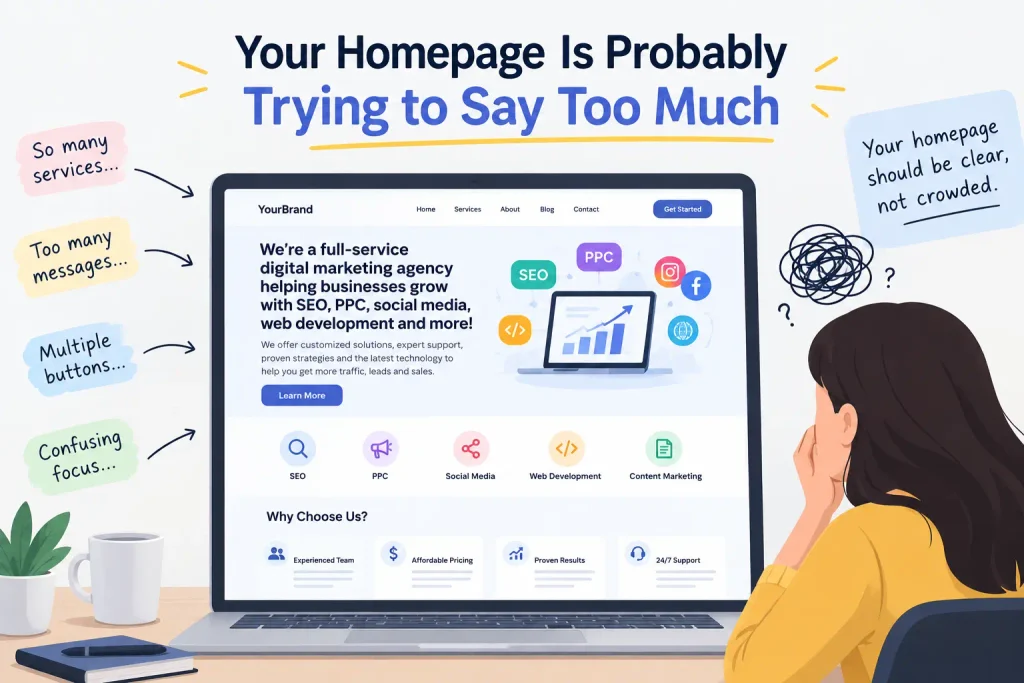
Look at your homepage the way a stranger would, with five seconds and no context. Can they tell what you do, who it’s for, and what to do next?
A lot of business sites open with something like “Empowering businesses through innovative solutions.” It reads fine and says nothing. A visitor who can’t instantly tell whether you’re a fit will do the sensible thing and hit the back button.
Try rewriting your top headline so it names the customer and the result. “Accounting software for Indian exporters who are tired of GST filing delays” beats a vague slogan every time. Specific headlines filter out the wrong visitors, and that’s good, because the right ones stay.
Also think about where people land. Your homepage is rarely the best entry point. A dedicated service page that matches a search query will usually convert better. One B2B benchmark guide suggests a landing page for a specific service should convert at two to three times the homepage rate. If your ads and SEO pages all point at the homepage, that’s a quick fix with real upside.
Too Many Choices, No Clear Next Step
Ever walked into a shop where every wall had a sale sign? You leave without buying anything.
Websites do the same thing. A header with nine menu items, three banners, a newsletter pop-up, a chat widget and a “Contact” button buried in the footer. The visitor has to work out what you want from them.
Unbounce data, as reported in a landing page statistics roundup, found that pages with a single call to action averaged 13.5% conversion, while pages with more than five links averaged 10.5%. The gap isn’t dramatic, but it’s free to fix. Decide what the one main action is on each page (book a call, request a quote, download the checklist) and make everything else quieter.
Be literal with your button text, too. “Submit” tells nobody anything. “Get my free site audit” tells them exactly what happens next.
Your Form Is Quietly Killing Leads
Forms are where interested people give up. Asking for name, email, phone, company size, budget, timeline and “how did you hear about us” feels thorough from the inside. From the visitor’s side it feels like paperwork.
A CXL Institute figure cited in a 2026 B2B conversion guide says every additional form field reduces conversions by about 4% on average. Treat that as a rough guide rather than a law, but the direction is right. Ask for what you need to follow up, and nothing else. You can collect the rest on the call.
If you do need longer forms, a multi-step version often feels lighter than one long page. And check that the form works on a phone. We’ve audited sites where the submit button sat just below the keyboard on mobile and couldn’t be tapped. Nobody had noticed for months.
Speed and Mobile: The Boring Fixes That Pay
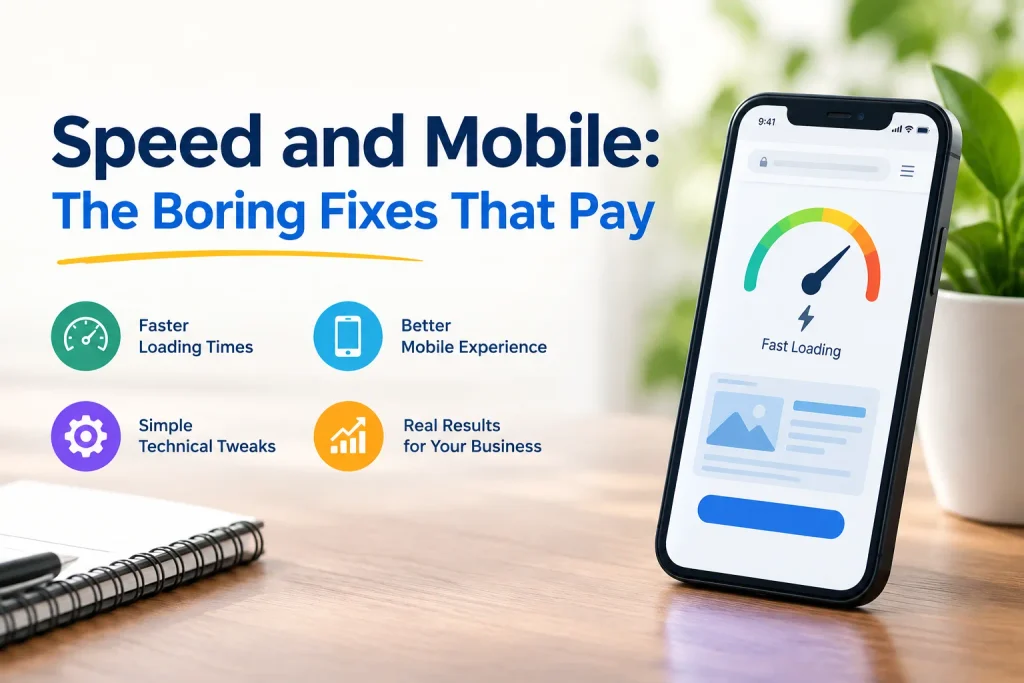
Nobody writes excited blog posts about page speed, but it keeps showing up in the data. One guide reports that B2B bounce rate jumps 32% after three seconds of load time, and more than half of B2B traffic is now mobile. These are secondary-source figures, so use them as a direction, not gospel. Still, test your own site on a mid-range Android phone over a normal 4G connection, not on your office Wi-Fi and a new laptop. What you see there is closer to what your visitors see.
Compressing images, removing unused plugins and cutting third-party scripts usually helps more than a full redesign.
Visitors Don’t Trust You Yet
Someone landing on a site they’ve never heard of is a little suspicious. That’s normal. Your job is to lower that suspicion fast.
Real client names, short case studies with actual numbers, photos of your team, a visible address and phone number, and reviews on pages where the decision gets made. These do more than polished copy. If your best proof sits on a “Testimonials” page that nobody visits, move it onto the service and contact pages.
Avoid stock photos of people shaking hands. Visitors have seen them a thousand times and they tell nothing about you.
Slow Follow-Up Wastes Good Leads
This one isn’t about the website, but it affects your lead count more than people admit. If an enquiry arrives on Friday and gets answered on Tuesday, the prospect has probably already talked to someone else. A 2026 B2B conversion report from Wonderchat flagged speed-to-lead as possibly the most consistently undervalued conversion lever.
Set up an instant email confirmation, a notification to your phone, and a rule for yourself: first reply within a few hours during working days. It costs nothing.
How to Generate Organic Leads Without Waiting a Year
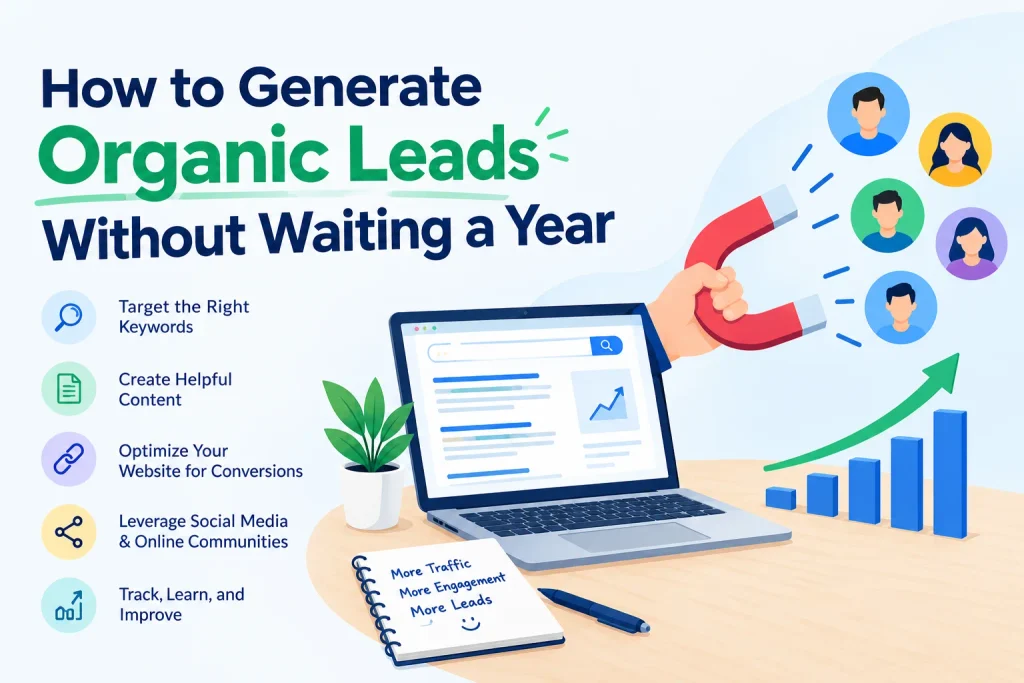
Many owners hear “SEO” and picture a long wait. Part of that’s true, but you can speed things up by working on pages that already rank.
1. Find pages with impressions but low clicks. Rewrite the titles and descriptions so they promise something specific.
2. Find pages with clicks but no conversions. Add a relevant offer. A blog post about website security should end with a link to a security audit, not a generic “contact us.”
3. Create comparison and “cost of” pages. Searches like “how much does a business website cost in India” come from people close to buying.
4. Add a useful lead magnet. A checklist or template that solves one small problem works better than a long e-book nobody finishes.
This is how to generate organic leads in a way that compounds. You aren’t chasing more visitors. You’re getting more from the ones already arriving.
A Simple Order of Attack
If you try to fix everything at once you’ll fix nothing. Here’s a sensible sequence for website lead generation strategies that don’t need a big budget:
• Week one: check search queries and see who’s really visiting.
• Week two: rewrite the main headline and call to action on your top three pages.
• Week three: shorten forms, fix mobile issues and speed up load times.
• Week four: add proof near every call to action and set up fast follow-up.
Then measure for a month. Change one thing at a time so you know what helped. This is the practical answer to how to turn website traffic into leads: small, boring, tested changes rather than a dramatic relaunch.
Frequently Asked Questions
Usually one of four things: the visitors aren’t buyers, the page doesn’t make the next step obvious, the form or mobile experience puts people off, or there’s little proof that you’re credible. Start by checking which search queries bring visitors in.
For most sites, 2% to 3% is typical, and B2B can be lower. Single-purpose landing pages often do better, with Unbounce reporting a median of 6.6% across industries. Compare yourself to your own industry and traffic source rather than one universal number.
Yes, when you target searches with buying intent. SEO for lead generation works best when your pages match what people type just before they contact a business, such as “service + city” or “cost of” searches, instead of broad educational topics.
Simple changes such as clearer headlines, shorter forms and faster load times can show an effect within weeks if you have enough traffic. Smaller sites may need a month or two of data before the numbers mean anything.
Fix first. Most sites lose leads through weak messaging, cluttered calls to action and slow pages, and none of those need a full rebuild. Redesign only if the site is outdated, not mobile-friendly or can’t be edited without a developer.
Getting Visitors but Not Enough Leads?
Find out why your website visitors aren’t contacting you. Get a practical review of your pages, forms, calls to action, and search traffic, with clear steps to start getting more leads from the visitors you already have.
Get Your Free Website Audit