
The most effective ways to generate plumbing leads are local SEO, an optimized Google Business Profile, Google Local Services Ads, and a website built to convert visitors into callers. When these work together, your phone rings from people who are already searching for a plumber in your area. This guide covers every working method, what each one costs, and what most plumbing businesses are getting wrong right now.
Why Most Plumbing Businesses Struggle to Get Consistent Leads
Ask any plumbing business owner and they’ll say the same thing: some weeks are slammed, others are quiet. The work is good but the leads are unpredictable.
That unpredictability usually comes down to one problem: the business is relying on referrals and a few random Google calls instead of a system that generates leads every single day.
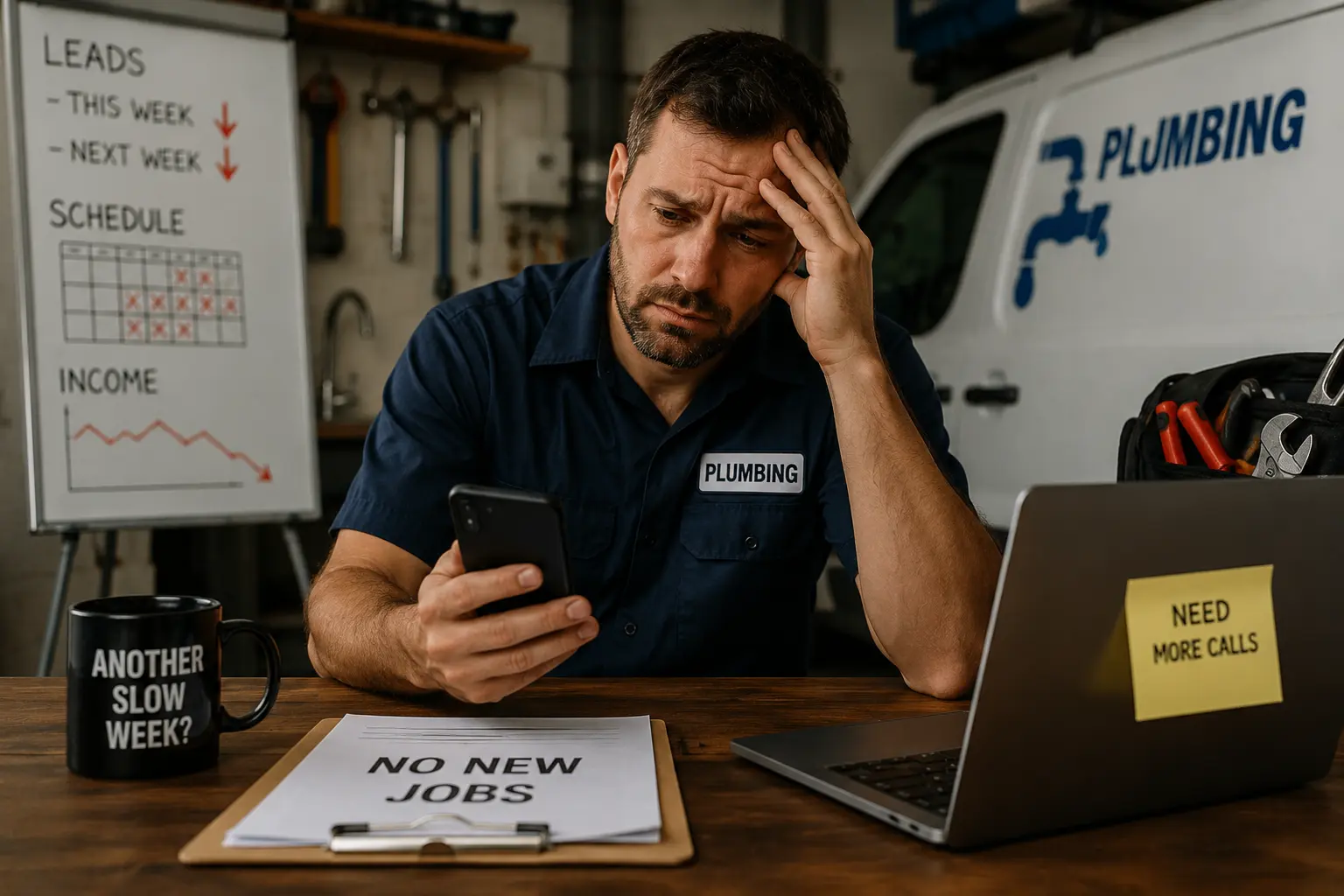
Referrals are great. But you can’t control when they come in. A proper lead generation setup changes that.
The U.S. plumbing market reached $169.8 billion in 2025, growing at a 3.2% CAGR over the past five years, according to IBISWorld. That growth means more plumbing businesses are competing for the same customers. The ones winning are not necessarily the best plumbers. They are the ones easiest to find online.
What a High-Quality Plumbing Lead Actually Looks Like
Before spending money on lead generation, it helps to know what you’re aiming for.
A high-quality plumbing lead has four things in common:
- The person is inside your actual service area
- They need a plumber now or within the next 24 to 48 hours
- They searched for a solution, not just browsed for options
- They are ready to book, not just compare prices
This is different from the leads that come through platforms like Angi or HomeAdvisor, where the same request gets sent to three or four plumbers at once. Those shared leads have a much lower close rate because every plumber is calling the same person.
Emergency plumbing leads that come directly from your Google presence convert at 40 to 50 percent when you respond fast. Shared web form leads convert at roughly 10 percent. The quality of the lead changes everything about the economics of your business.
The goal of this guide is to show you how to build channels that send you exclusive, high-intent calls, not shared ones.
Read Also: Why Local Businesses Should Invest in SEO for Long-Term Growth?
The 6 Best Ways to Generate Plumbing Leads Online
1. Local SEO: The Channel That Pays You Back for Years
Local SEO is the process of making your website and online presence appear when someone nearby searches for plumbing services. Search terms like “plumber near me,” “drain cleaning in [city],” “emergency plumber [city],” and “water heater repair near me” all fall into this category.
When done properly, local SEO brings in calls every month without a recurring ad budget. That’s what makes it the highest long-term ROI channel for any plumbing business.
Here’s what actually moves the needle for local SEO:
Service pages that match how people search. A single page that says “plumbing services” is not enough. You need separate pages for drain cleaning, water heater repair, pipe repair, emergency plumbing, and any other service you offer. Each page targets specific search terms people use.
City and location pages. If you serve multiple areas, each city or neighborhood should have its own page. A page targeting “plumber in Hoboken” will rank for that area in a way that your homepage never will.
Mobile page speed. Most plumbing searches happen on a phone. If your site takes more than three seconds to load on mobile, people leave before they even read a word.
Schema markup. This is code added to your website that tells Google exactly what your business is, what services you offer, and where you’re located. Most plumbing websites don’t have this set up correctly, which puts them behind competitors who do.
Backlinks from local and industry sources. Links from local business directories, plumbing associations, supplier websites, and home improvement platforms tell Google your business is legitimate and trusted.
If you want the full breakdown on what a professional plumber SEO service covers, that page goes into the specific work involved in ranking a plumbing website locally.
2. Google Business Profile: Your Most Valuable Free Listing
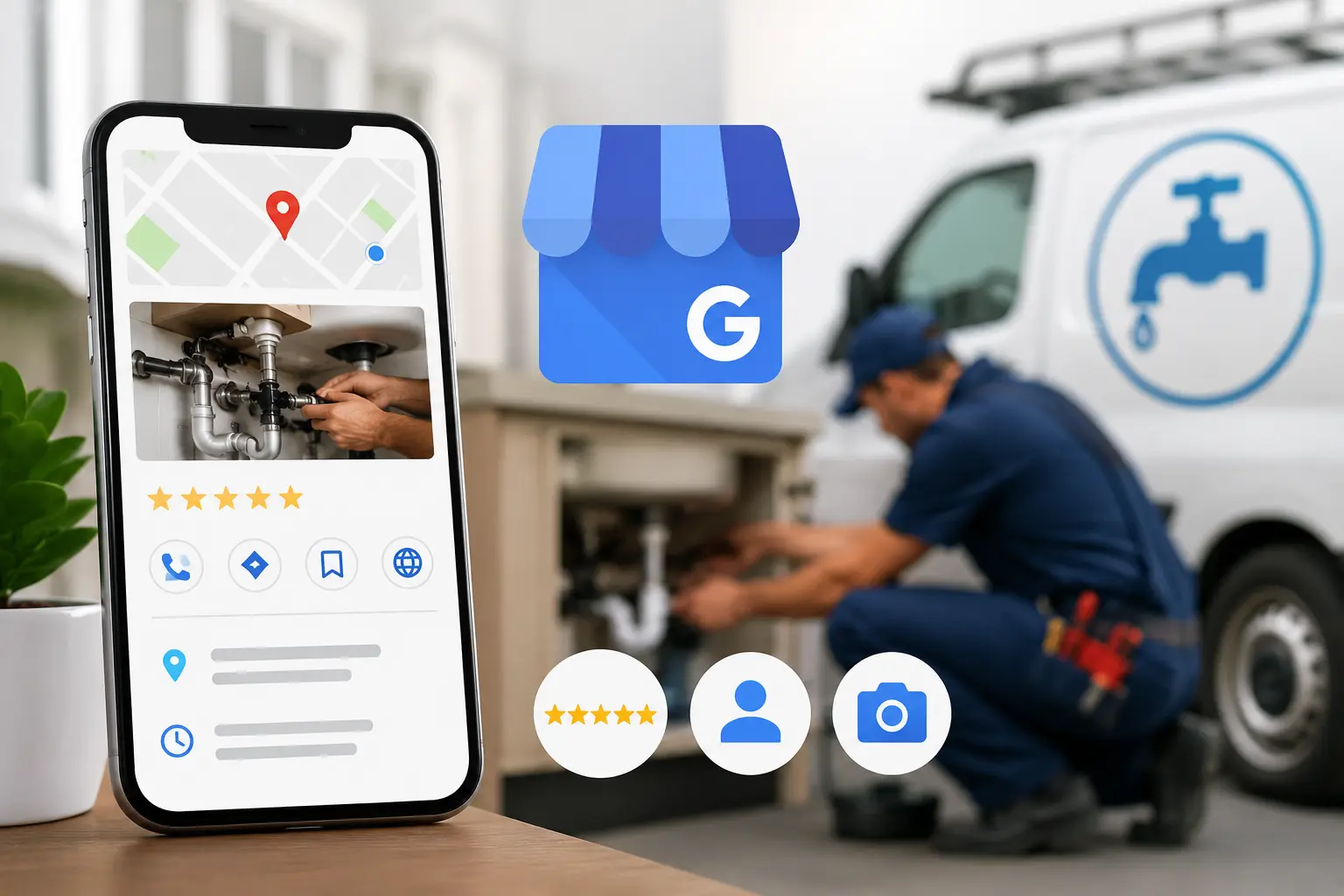
Google Business Profile (GBP) is the listing that appears in Google Maps and the local 3-pack that set of three businesses shown at the top of search results for local queries.
Most “plumber near me” searches end with the user clicking on one of these three businesses. If you’re not in that group, you are invisible to a large portion of potential customers.
Setting up a GBP profile is free. Optimizing it is where the work comes in.
Business categories. Your primary category should be “Plumber.” You can add secondary categories like “Drainage service,” “Water heater repair service,” or “Emergency plumber.” Most businesses only pick one category and miss traffic they could be capturing.
Service area settings. Make sure your service area reflects where you actually work. If you serve five cities, list all five. GBP uses this to show your listing to people in those areas.
Photos. Businesses with 10 or more photos on their GBP get significantly more clicks than those with only one or two. Add photos of your team, your trucks, completed work, and your office if you have one.
Google Posts. These are short updates you can publish directly to your GBP profile. Post promotions, seasonal reminders, or service highlights. It takes five minutes and shows Google your profile is active.
Q&A section. This section often gets ignored. You can add your own questions and answers here. Seed it with common questions your customers ask: “Do you offer emergency plumbing?” “Are you licensed and insured?” “What areas do you serve?”
Reviews are another critical part of your GBP performance, and they deserve their own section below.
3. Google Local Services Ads: Calls You Pay For Only When They Come In
Google Local Services Ads (LSAs) are the listings that appear at the very top of Google search results, above regular Google Ads. They look different from standard ads they show your business name, star rating, years in business, and a direct call button.
The key difference between LSAs and regular Google Ads is how you pay. With Google Ads, you pay every time someone clicks your ad, even if they don’t call. With LSAs, you pay only when a verified lead contacts you directly through the ad.
LSAs also carry the Google Guarantee badge, which tells the customer that Google has screened your business. That badge builds trust instantly, especially for someone calling about an emergency.
To qualify for LSAs, you need to pass Google’s background check, verify your licenses, and show proof of insurance. The setup takes some work, but once approved, LSAs put your business in front of high-intent customers at the exact moment they’re searching.
LSAs work especially well for emergency plumbing, drain cleaning, and water heater services because those are the searches where someone needs help right now. They’re not researching. They’re ready to book.
4. A Plumbing Website That Converts Visitors Into Callers
This is the piece that most plumbing businesses underestimate. You can get traffic from Google. But if your website doesn’t give people a reason to call, that traffic means nothing.
Think of your website as a salesperson who works around the clock. A good one builds trust, answers the right questions, and makes it easy to take the next step. A bad one loses customers who were already interested.
Here’s what a high-converting plumbing website needs:
A click-to-call phone number at the top of every page. On mobile, this should be a tap-to-call button. Most people searching for a plumber on their phone want to call immediately. Make it one tap.
Trust signals above the fold. Before someone scrolls, they should see your license number, years in business, service area, and any badges like BBB accreditation or Google Guaranteed. These tell a first-time visitor that you’re legitimate.
Clear service descriptions. Don’t just list service names. Write a short paragraph under each service that explains what the job involves, what problems you solve, and why someone should call you specifically.
Before-and-after or project photos. These build trust faster than any amount of text. Real photos of real work you’ve done are more convincing than stock images.
A fast, mobile-first design. If your website wasn’t built with mobile in mind, it’s likely hurting your rankings and your conversions at the same time. Google ranks mobile experience as a key factor in local search.
If your current website is slow or difficult to navigate, a professional website built for home service businesses makes a real difference in how many visitors actually pick up the phone.
5. Google Ads (PPC): Fast Leads While Your SEO Builds
Google Ads let you appear at the top of search results immediately, without waiting for organic rankings to develop. You bid on keywords like “emergency plumber near me” or “drain cleaning service [city],” and your ad shows when someone searches those terms.
The tradeoff is cost. You pay per click, and every click doesn’t become a lead. This is why campaign setup and keyword targeting matter a lot more than most business owners realize.
Some things that separate profitable Google Ads campaigns for plumbers from wasteful ones:
Negative keywords. These are searches you don’t want your ad to show for. “Plumber salary,” “how to become a plumber,” “DIY plumbing tips” these searches cost you money without ever turning into a paying customer. A properly set up campaign blocks them.
Location targeting. Your ads should only show to people inside your actual service area. It sounds obvious, but many default campaign settings show ads to a much wider area than intended.
Dedicated landing pages. Sending ad traffic to your homepage wastes money. Each ad campaign should go to a specific page built around that ad’s message. An emergency plumbing ad should land on an emergency plumbing page, not a general homepage.
Call tracking. You need to know exactly which keywords and which ads are generating phone calls. Without this, you’re flying blind.
LocaliQ’s 2025 benchmark report based on data from over 3,200 home services campaigns found that cost per lead increased for 69% of businesses, rising an average of 10.51% year over year. That makes targeting and campaign management more important than ever. A poorly managed PPC campaign burns budget. A well-managed one pays for itself.
6. Online Reviews: The Lead Generator Nobody Takes Seriously Enough
Reviews are not just social proof. They are an active ranking signal for your Google Business Profile, and they directly influence whether a potential customer calls you or your competitor.
BrightLocal’s 2025 Local Consumer Review Survey found that 87% of consumers read online reviews for local businesses, and 73% only pay attention to reviews written in the last month.
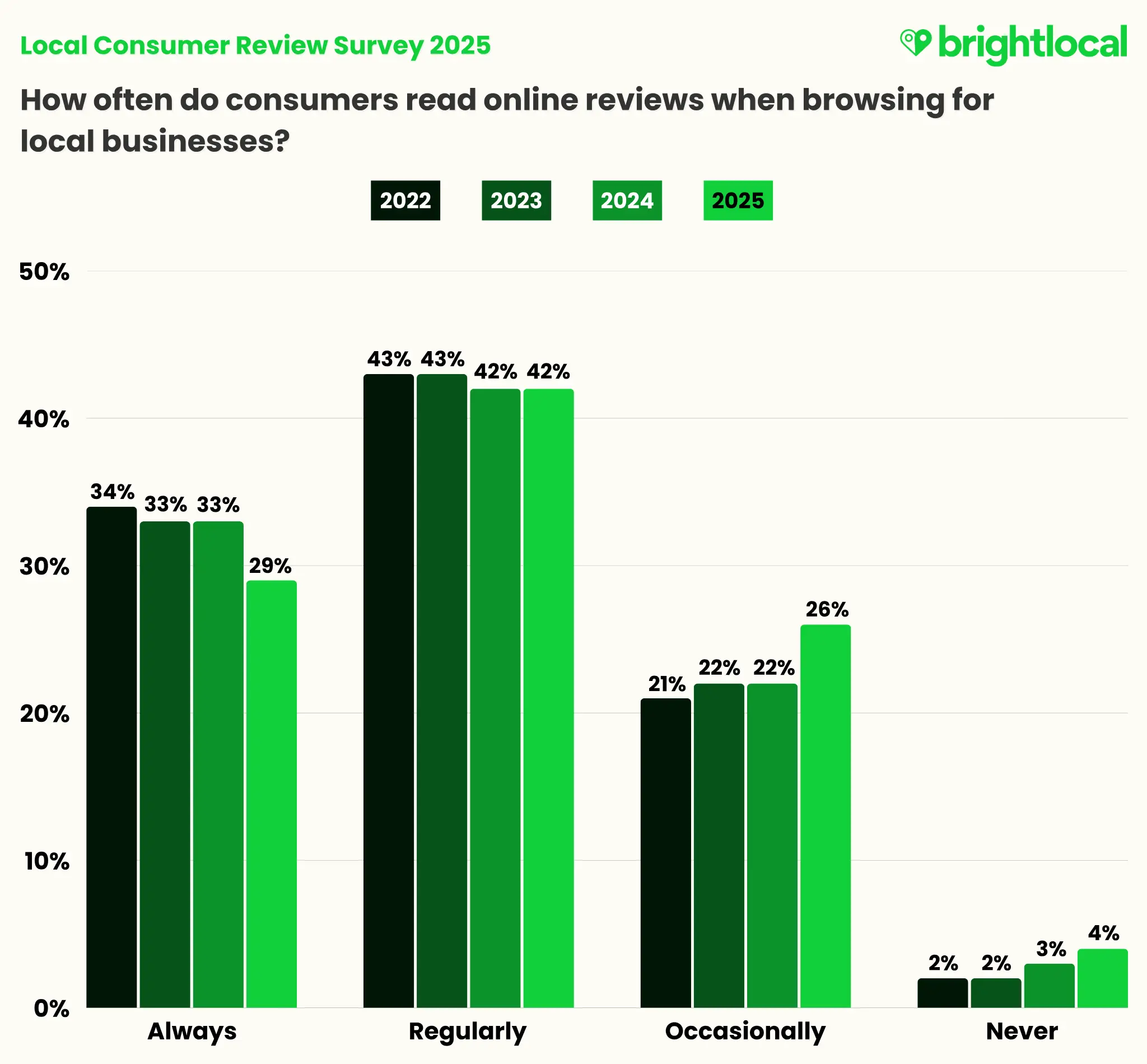
That second stat is important. A pile of 5-star reviews from two years ago carries less weight than a handful of recent ones. Consistent, ongoing review generation is what keeps your profile competitive.
The businesses that get the most reviews are not necessarily the best plumbers. They are the ones who have a system for asking.
Here is a simple review system that works:
After completing a job, send the customer a text message with a direct link to your Google review page. Don’t just say “please leave us a review.” Say something like: “We’re glad we could help. If you have a moment, your feedback helps other homeowners find a trusted plumber in the area.”
The direct link matters. Making it one tap removes the friction that stops most people from following through.
Train every technician to mention the review request before they leave the job site. A warm in-person ask followed by a text link is the most effective combination.
Also respond to every review, good or bad. A professional response to a negative review shows potential customers how you handle problems. It often does more for your reputation than a dozen positive ones.
Read Also: Do Google Reviews Help SEO? What Google Really Says
The Lead Response Problem Nobody Talks About
Here’s something competitors rarely explain: getting more leads doesn’t matter if you’re slow to respond.
More than half of plumbing customers book with the first business that responds to them. Not the cheapest. Not the most experienced. The first one to pick up or call back.
This is where a lot of plumbing businesses silently lose leads they’ve already paid to generate.
Missed calls are the biggest leak in any lead generation system. If a potential customer calls and gets voicemail, there is a reasonable chance they call the next business on their list before you call back.
A few things that help:
Set up a missed-call text reply. When someone calls and you miss it, they receive an automatic text within seconds that says something like: “Sorry we missed your call! We’re on a job but will call you back shortly. Is there anything we can help with right now?” This keeps the lead warm.
Have a clear voicemail. Tell callers exactly what to expect: “You’ve reached [Business Name]. We’re currently with a customer. Leave your name and number and we’ll call back within 30 minutes.” Then actually call back within 30 minutes.
Assign someone to answer the phone during business hours. For a busy plumbing operation, the cost of one missed lead per day far exceeds the cost of having a dedicated person or answering service handle incoming calls.
Speed of response is not a courtesy. It’s a competitive advantage that directly affects your revenue.
Free vs. Paid Plumbing Lead Generation: What to Use and When
A common question from plumbing business owners is whether to spend money on ads or focus on free channels. The honest answer depends on where you are in your business.
If you’re a newer plumbing business with a limited budget, start with your Google Business Profile and focus on getting your first 20 to 30 reviews. This is free and has a direct impact on local visibility. Run a small LSA campaign alongside it to get calls coming in while your organic presence builds.
If you’ve been in business for two or more years and have a budget for marketing, run local SEO and Google Ads at the same time. SEO takes three to six months to show results but keeps paying indefinitely. Ads produce calls this week but stop the moment you stop paying. Together, they cover both short-term and long-term lead flow.
If you’re buying leads from platforms like Angi, Thumbtack, or HomeAdvisor, understand what you’re actually paying per booked customer, not per lead. A $35 lead that closes at 15% costs you over $230 per customer. The same amount invested in local SEO might cost less per customer over time and bring in exclusive calls.
For home service businesses at any stage, the goal is to build owned channels: your website, your GBP, your reviews that don’t require you to keep paying a platform every month just to be visible.
Plumbing Lead Generation Mistakes That Cost You Real Money
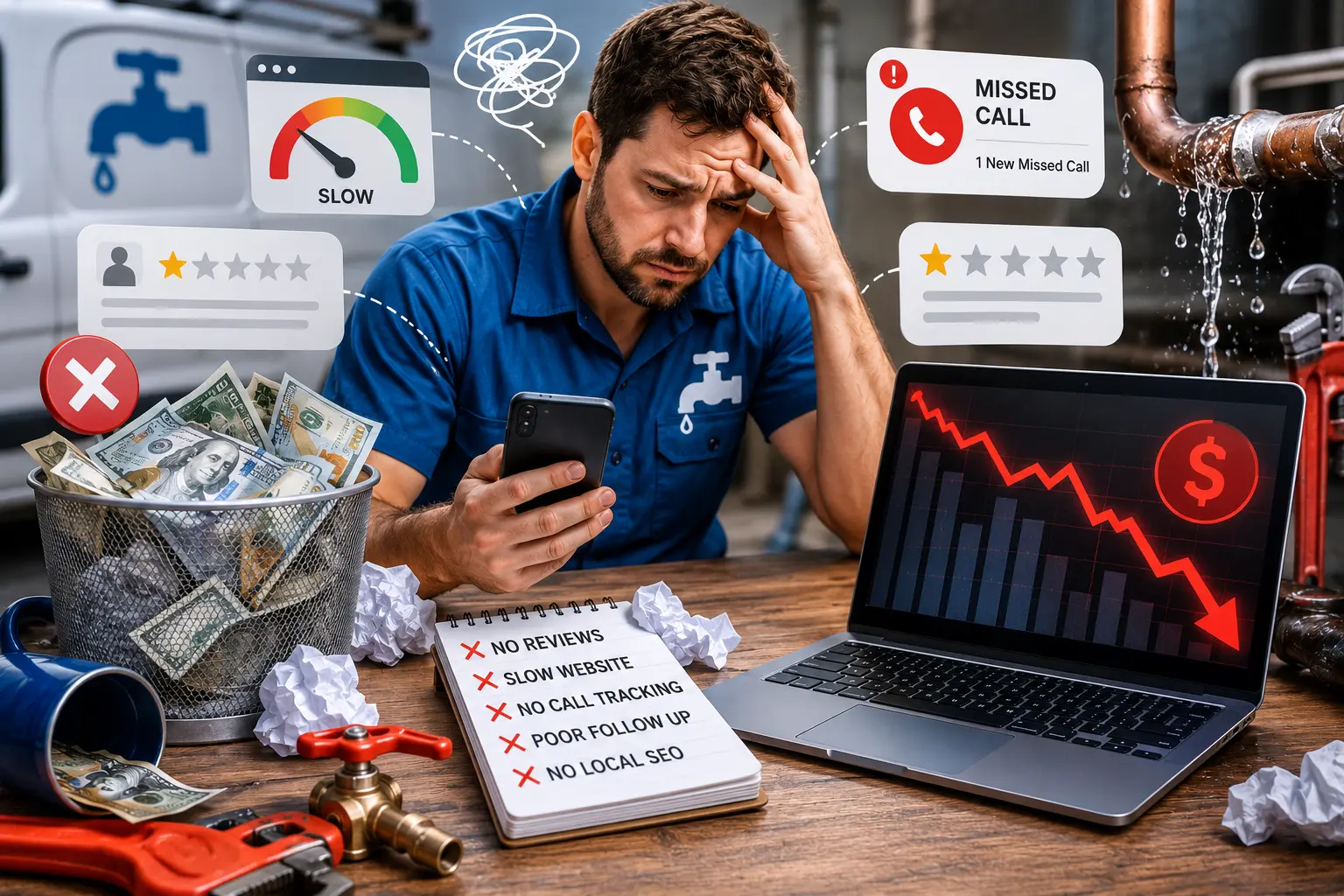
These are the mistakes that are costing plumbing businesses calls right now:
Running ads to a homepage. Every ad campaign needs its own landing page built around the specific service being advertised. A homepage is too general to convert paid traffic effectively.
Ignoring your Google Business Profile after setup. GBP is not a set-and-forget listing. Regular posts, updated photos, and consistent review responses keep your profile active and visible.
No mobile click-to-call button. If someone on a phone has to copy your number and open their dialer manually, many of them won’t. One tap should start the call.
Buying shared leads expecting a high close rate. If the same lead goes to four plumbers and you’re the third to call, you’re already at a disadvantage. Shared lead platforms can work, but they require fast response and very low cost-per-lead to be profitable.
Not following up on estimates. Many plumbing businesses send a quote and never follow up. A single follow-up call or text two days later can recover 20 to 30 percent of quotes that would otherwise go cold.
No call tracking in place. Without call tracking, you cannot tell which marketing channel is generating calls. You end up spending money on what feels productive rather than what is actually working.
How to Know If Your Lead Generation Is Actually Working
Most plumbing business owners judge their marketing by how busy they feel. That’s not reliable.
Here are the specific numbers to track every month:
Total inbound calls by source. Use call tracking software (CallRail is a widely used option) to tag every call back to the source: organic search, Google Ads, LSAs, GBP, or referral. This tells you where your money is working.
Cost per lead by channel. Divide what you spent on a channel by how many leads it produced. A Google Ads campaign might generate 30 leads for $600; that’s $20 per lead. If only half turn into booked jobs, your cost per customer is $40. Know this number for every channel.
Lead-to-booked-job rate. Track what percentage of leads actually become jobs. If you’re closing 40% of leads from your website but only 10% from a lead platform, that tells you where to focus.
Google Business Profile insights. Inside GBP, you can see how many people viewed your profile, clicked your website, and called you directly. Review this monthly and note what’s trending up or down.
Google Search Console. This free tool shows which search terms are bringing people to your website, how many impressions you’re getting, and how many clicks. If you rank on page two for a valuable keyword, that’s where to focus your next round of SEO work.
Setting aside 30 minutes at the end of each month to review these numbers is one of the highest-leverage habits a plumbing business owner can build.
When It Makes Sense to Bring in an SEO Agency
Some plumbing business owners handle their own marketing successfully. But there are clear signs when outside help makes more sense:
You’ve been running Google Ads for more than three months without a clear picture of what’s working. You’ve set up your GBP profile but aren’t sure why competitors rank above you. Your website gets some traffic but generates very few calls. You don’t have time to write service pages, build local citations, and manage your review generation consistently.
An SEO agency that specializes in home services understands the search behavior specific to plumbing. They know which keywords drive calls versus which ones drive traffic without conversions. They also know how to build the kind of location authority that moves a plumbing website up in competitive local markets.
Before hiring anyone, ask to see examples of plumbing or home service clients they’ve worked with. Ask what specific rankings improved and what happened to lead volume. Good agencies show you results, not presentations.
Red flags to avoid: guaranteed first-page rankings within 30 days, no monthly reporting, and proposals that mention a lot of work without tying any of it to call volume or lead cost.
FAQs
Plumbers get more leads online by improving their visibility where homeowners search for help. The most effective channels include Google Business Profile, local SEO, Google Local Services Ads, online reviews, and a mobile-friendly website with click-to-call functionality. Using multiple channels together creates a more consistent flow of qualified leads.
The best long-term strategy is combining local SEO with an optimized Google Business Profile. SEO helps your website rank for searches like “emergency plumber near me,” while Google Business Profile increases visibility in local map results. For faster results, many plumbing companies also run Google Local Services Ads.
The cost of plumbing leads varies depending on the channel. Shared leads from third-party platforms often cost between $20 and $60 per lead, while Google Local Services Ads typically charge per verified lead. SEO usually requires a higher upfront investment but often delivers a lower cost per booked job over time because the leads are exclusive.
Yes, Google Local Services Ads are one of the most effective lead sources for plumbing businesses because you only pay for verified leads rather than clicks. These ads appear above traditional search results and include the Google Guaranteed badge, which helps build trust with potential customers.
Lead generation platforms like Angi and HomeAdvisor can help fill short-term gaps, but many of their leads are shared with multiple plumbing companies. This usually results in lower close rates and higher customer acquisition costs. Exclusive leads generated through your own website and Google presence typically convert better.
Online reviews are critical because they influence both search rankings and customer trust. Most homeowners compare reviews before choosing a plumber, especially for emergency services. Consistently generating recent reviews and responding to customer feedback can significantly increase calls and bookings.
SEO and Google Ads serve different purposes. Google Ads can generate leads quickly, while SEO builds long-term visibility and reduces dependence on paid advertising. Many successful plumbing businesses use Google Ads for immediate lead generation while investing in SEO for sustainable growth.
Low conversions often happen when a website lacks clear calls to action, click-to-call buttons, trust signals, or service-specific landing pages. Slow loading times and poor mobile usability can also reduce conversions. A plumbing website should make it easy for visitors to contact you immediately.
Plumbing businesses should track total calls, cost per lead, lead-to-booked-job rate, response time, Google Business Profile interactions, and website conversion rates. Monitoring these metrics helps identify which marketing channels generate the most profitable leads.
Conclusion: Build a System, Not a Strategy
Generating plumbing leads consistently is not about one tactic. It’s about building a system where your Google Business Profile, your website, your reviews, and your ad campaigns all work together to put your business in front of the right people at the right moment.
The plumbers who get the most calls are not necessarily the most skilled. They are the most visible, the fastest to respond, and the easiest to trust from a quick Google search.
Start with your GBP. Build your website around calls, not just information. Run ads to get short-term traction. And use SEO to build the kind of long-term presence that keeps generating leads even when you’re not spending a dollar.
If you want a team that has done this specifically for plumbing and home service businesses, VinzoTech builds lead generation systems that bring in real calls, not just rankings and traffic reports. Reach out and let’s talk about what’s possible for your business.