


Local search matters because it helps Australian service businesses appear when people are actively looking for a nearby provider. A person searching for a plumber in Brisbane, a roofer in Melbourne, or an electrician in Perth is usually looking for a business that can solve a specific problem in a specific area. That makes local search different from broad informational searches.
The importance of search is also clear from the Australian market. The Australian Competition and Consumer Commission (ACCC) reported that Google held nearly 94% of Australia’s general search market in August 2024, with Bing at 4.7%. For a service business, being visible in Google Search and Google Maps can therefore play an important role in how potential customers discover local providers.
Local SEO is not about adding a city name to every page or trying to rank in every suburb. It is about making it clear what a business does, where it operates, and which searches are relevant to its services.
What Is Local Search?
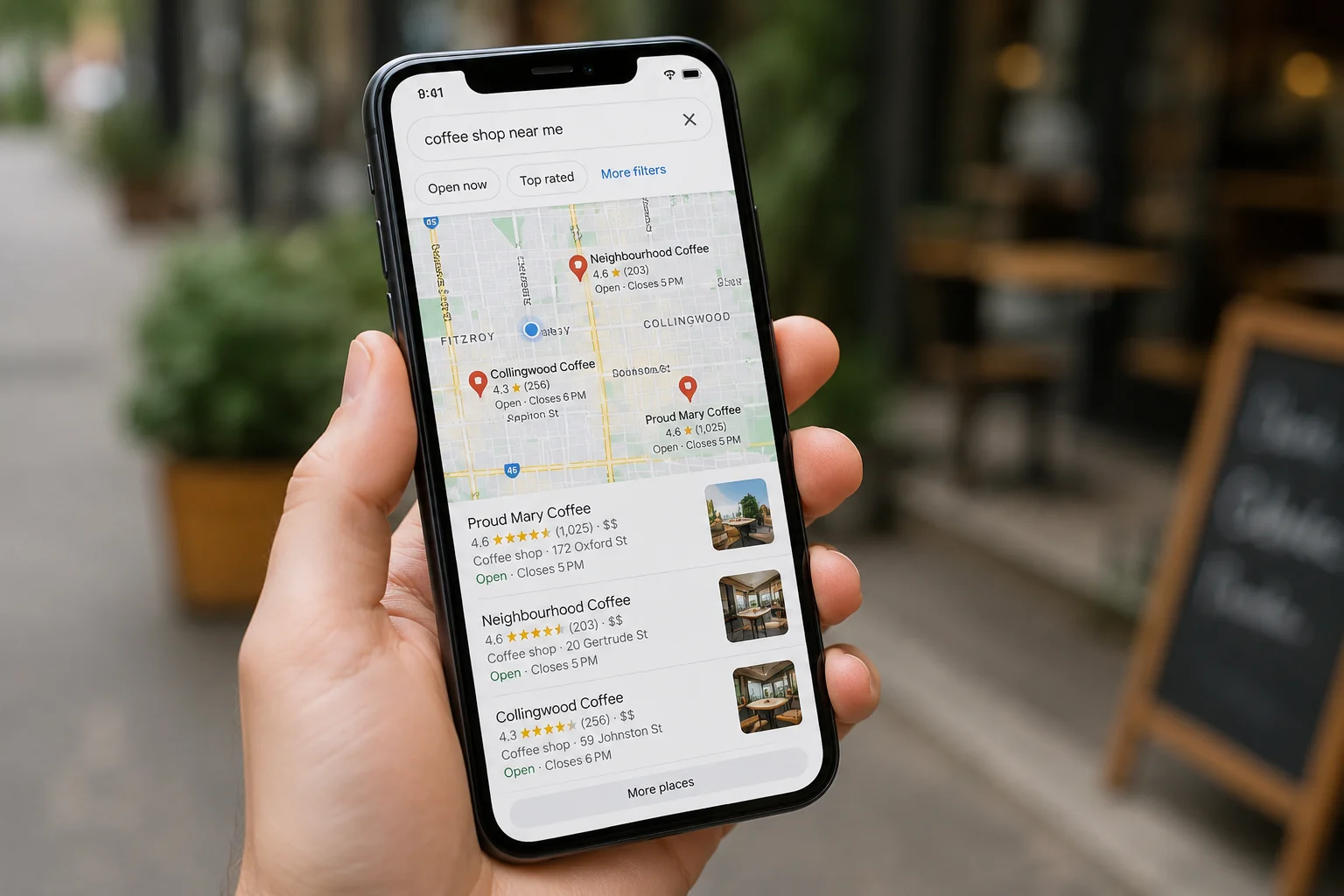
Local search happens when someone uses a search engine to find a product, service, or business connected to a particular location.
Some searches are obviously local:
- plumber in Sydney
- electrician Brisbane
- roof repairs Melbourne
- dentist near me
- mechanic Perth
Others have local intent even without a location in the search. Someone searching for “emergency plumber” from their phone may be looking for businesses that can reach them quickly.
The Australian Government’s business.gov.au gives a useful example of how search intent can become more location-specific as a customer gets closer to making a decision. A person may begin with a broad search such as “leaking tap”, move to something like “plumber in Townsville”, and eventually search directly for a business name.
That progression matters for service businesses because the wording of a search can reveal how close someone is to contacting a provider.
Local Search Is About More Than “Near Me”
“Near me” is only one form of local search.
People also use:
- suburbs
- cities
- states
- regions
- service areas
- postcode-related searches
- phrases such as “in Sydney” or “servicing Gold Coast”
The exact wording depends on the service and the customer.
A homeowner may search for “blocked drain plumber Parramatta”, while a business owner may search for “commercial electrician Sydney”. Both searches contain a clear local need, but the service and customer intent are different.
This is why local SEO should start with understanding the customer rather than simply collecting a list of locations.
Why Local Search Matters for Australian Service Businesses
A service business usually cannot serve every person in Australia. A plumber, electrician, landscaper, pest control company, or physiotherapist normally works within a defined geographic area.
Local search allows these businesses to focus their online visibility on the areas they can actually serve.
Consider a plumbing company based in Brisbane. Ranking for a broad search such as “plumbing” may sound attractive, but it does not tell Google or the customer where the business operates. A search such as “emergency plumber Brisbane” is much closer to the company’s actual service and customer need.
The same principle applies to other industries.
A roofing company may want visibility for roof repairs in its service area. A dental clinic may focus on searches connected to its suburb or city. An automotive workshop may need to appear when people nearby search for a mechanic or a specific repair.
The goal is not simply to generate more website visits. It is to attract relevant local visitors who have a reason to contact the business.
Local Searches Can Show Strong Customer Intent
Search intent can change the value of a keyword.
Compare:
how to fix a leaking tap
with:
emergency plumber Sydney
The first search suggests that the person may be researching a problem and considering whether to solve it themselves.
The second suggests a much stronger need for a service provider.
This does not mean informational searches have no value. They can help a business build visibility and answer customer questions. But service businesses should understand which searches are closer to an enquiry or booking.
Is Your Business Showing Up Where Local Customers Search?
Your customers may already be searching for the services you provide. If your website and Google Business Profile are not appearing for the right local searches, there may be opportunities worth addressing.
How Google Decides Which Local Businesses to Show
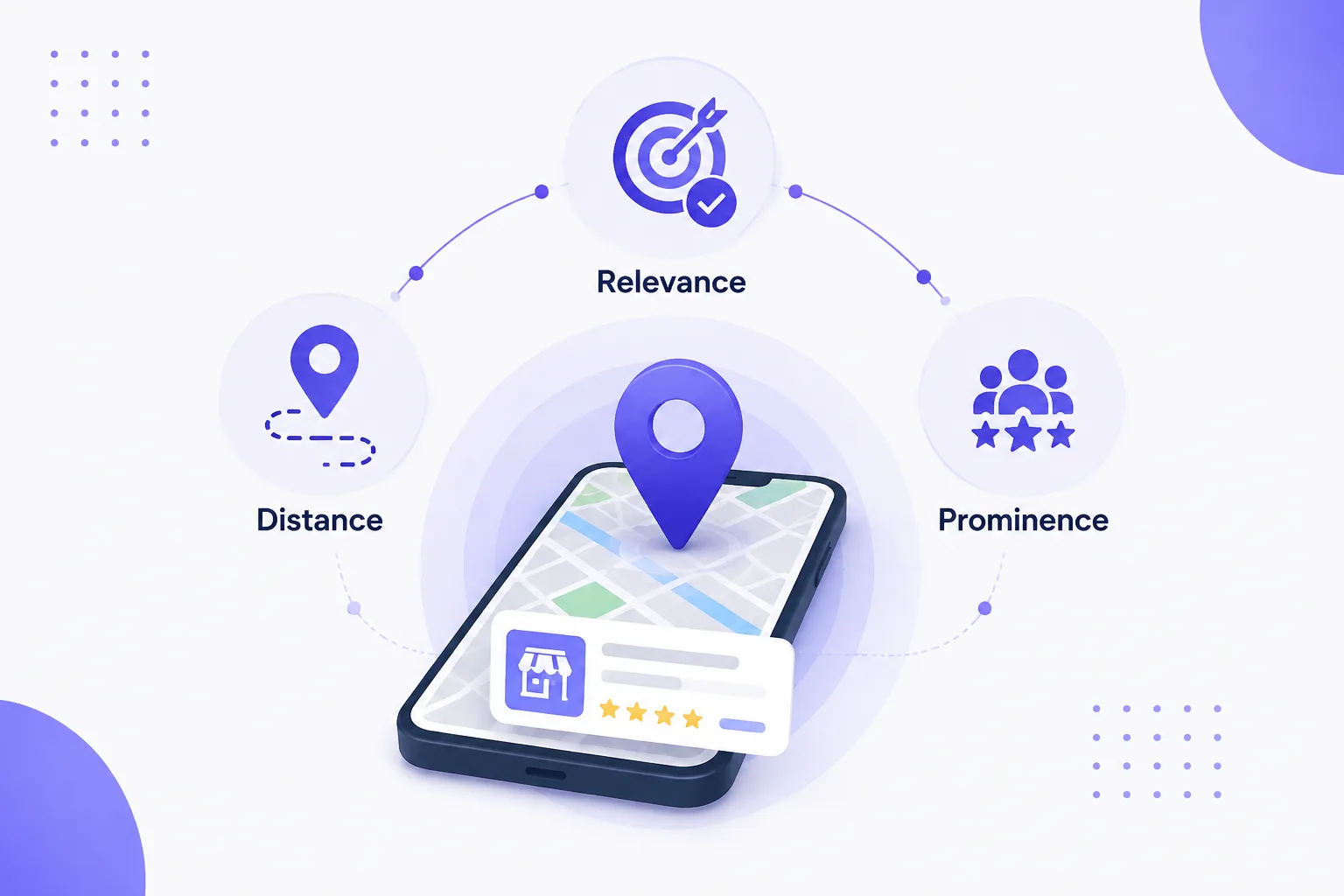
Google says local results are mainly influenced by relevance, distance, and prominence. These factors help determine which businesses are a good match for a person’s search and location.
Relevance
Relevance is about how closely a business matches what someone is searching for.
If someone searches for “emergency electrician”, a business that clearly provides emergency electrical services is more relevant than a business that only offers unrelated electrical products.
Accurate business information, suitable categories, clear service descriptions, and useful website content can help Google understand what the business offers.
Distance
Distance considers how far a business is from the person searching or the location included in the search.
This is one reason a business cannot expect to rank equally well in every suburb simply by creating a page for each one.
A genuine service area matters.
A company serving customers across several parts of Melbourne may have a broader local reach than a business serving only one neighbourhood. The strategy should reflect the actual business rather than trying to manufacture geographic relevance.
Prominence
Prominence relates to how well-known a business is.
Google notes that information from across the web, including links and reviews, can contribute to prominence. Reviews and positive ratings can also help a business stand out in local results.
This is one reason local SEO should not be treated as a single task. A business’s website, Business Profile, reviews, and wider online presence can all contribute to how customers discover and evaluate it.
Google Business Profile Is an Important Part of Local SEO
For businesses that serve customers locally, a well-maintained Google Business Profile is an important part of the search presence.
The profile should accurately represent the real business.
That includes information such as:
- Business category
- Address or service area
- Opening hours
- Contact details
- Services
- Photos
- Customer reviews
Google recommends keeping Business Profile information complete and accurate. It also encourages businesses to respond to reviews and add photos and videos where appropriate.
But a Business Profile should not be treated as a replacement for a website.
Your website gives you space to explain services in greater detail, answer customer questions, show service areas, and create useful pages around the searches that matter to the business.
Your Website Still Matters in Local SEO
A strong local presence needs more than a map listing.
Your website should make several things clear:
What do you offer?
A visitor should quickly understand the services available.
Where do you operate?
Your service areas should reflect where the business actually works.
Who are your customers?
The content should speak to the people and organisations the business serves.
Why should someone contact you?
Clear service information, useful answers, evidence of experience, and straightforward contact options can help a visitor decide what to do next.
Build Useful Service Pages
A business does not necessarily need one page called “Services” and nothing else.
A plumbing company, for example, may genuinely offer:
- Emergency plumbing
- Hot water repairs
- Blocked drains
- Leak detection
Separate pages can make sense when each service is substantial enough to deserve its own useful information.
The same applies to other service businesses.
The important point is quality and purpose. A page should exist because customers need the information, not simply because another keyword was found.
Location Pages Need a Real Purpose
Location pages can be useful when a business genuinely serves different areas.
A page about servicing customers in Newcastle could explain the services available there, the types of properties served, travel arrangements, and other information that is actually relevant to customers in that area.
What should be avoided is creating dozens of pages where the only meaningful change is the suburb name.
That approach gives users very little extra information and does not create a stronger reason for them to visit the page.
Choosing Local Keywords for Australian Customers
Keyword research should reflect the language customers actually use.
The Australian Government recommends understanding customer search behaviour and choosing keywords relevant to the business, services, and location. It also warns against overusing keywords because this can negatively affect SEO and make content harder to read.
A useful local keyword set might include:
| Search | Likely intent |
| plumber Sydney | Find a local provider |
| emergency electrician Melbourne | Immediate service |
| roof repairs Brisbane | Specific service |
| accountant Perth | Professional service |
| pest control Gold Coast | Local service |
| how much does roof repair cost | Research |
| best mechanic near me | Comparison |
The goal is not to use every variation on the same page.
Instead, match the search to the page that best answers it.
Common Local SEO Mistakes
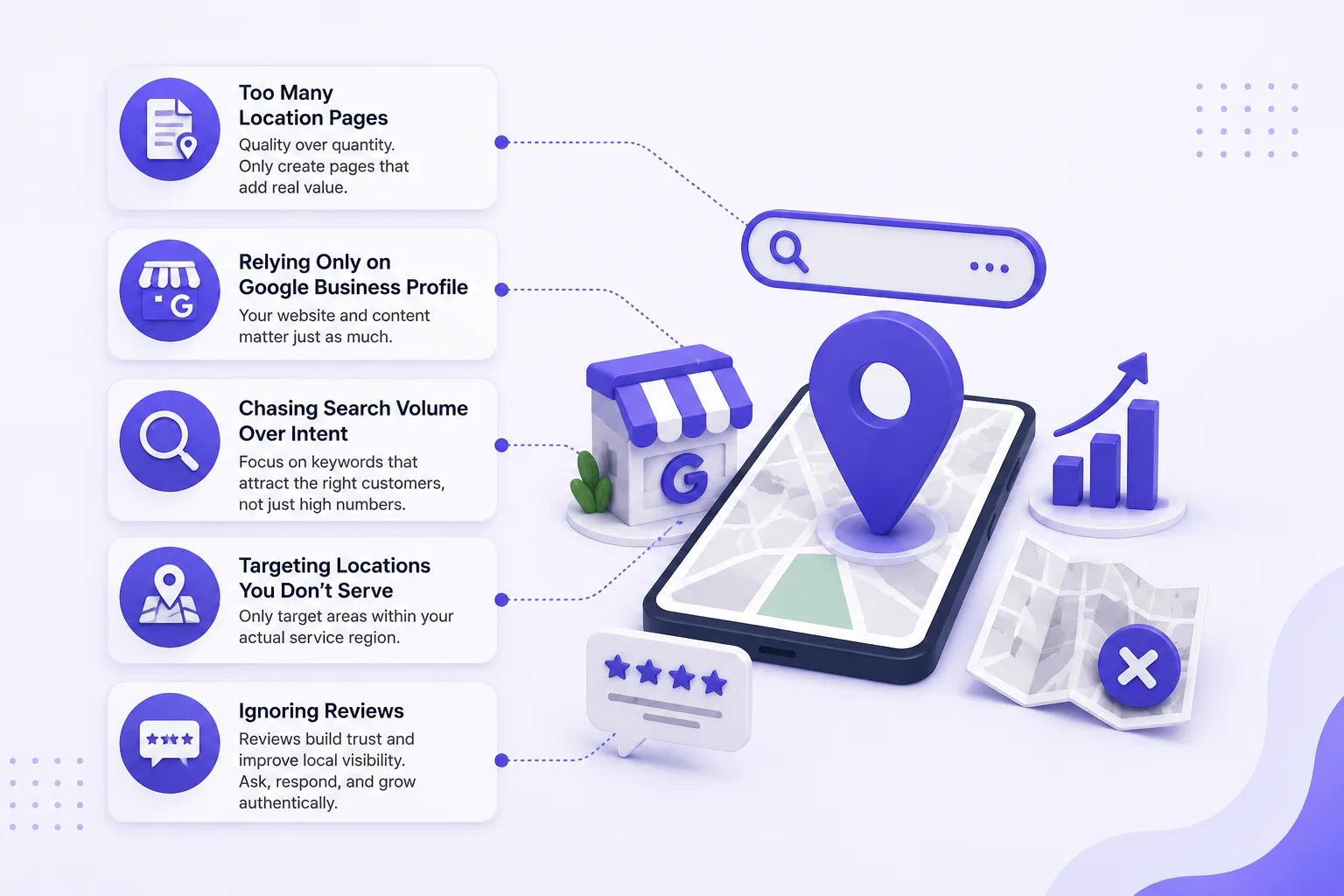
Creating Too Many Location Pages
Publishing a page for every suburb can look attractive from a keyword perspective, but it can quickly create a collection of pages with little unique value.
Only create location pages where there is a genuine reason to provide information about that area.
Treating Google Business Profile as the Entire Strategy
A Business Profile is important, but local visibility also depends on the wider online presence.
Your website still needs useful service information, clear location signals, good page structure, and content that answers customer needs.
Chasing Search Volume Instead of Customer Intent
A keyword with thousands of searches is not automatically better than a keyword with a few hundred.
A smaller local search can be more valuable if it comes from someone looking for exactly what the business provides.
Using Locations Where the Business Does Not Operate
If a company does not serve an area, creating a page simply to rank for that location is unlikely to provide a good customer experience.
Local targeting should follow the actual service area.
Ignoring Reviews
Reviews can influence how customers view a business and can also contribute to local prominence. The Australian Government notes that online reviews can help businesses improve local search visibility.
Businesses should ask genuine customers for reviews and respond appropriately. Fake or misleading reviews are not a shortcut worth taking.
Not Sure What Is Holding Back Your Local Visibility?
Too many location pages, weak service content, incomplete business information, or the wrong search terms can all make local SEO harder to manage. A closer look at your website can show where the biggest opportunities are.
How Local SEO Differs Across Industries
Local search does not work exactly the same way for every service business.
Home and Trade Services
Plumbers, electricians, roofers, pest control companies, and similar businesses often depend heavily on geographic relevance.
Searches can also have urgent intent.
Someone with a burst pipe may care more about finding an available plumber nearby than reading a long company history.
Professional Services
Accountants, lawyers, consultants, and other professional firms may need to build trust before someone makes contact.
Their local content can focus on services, areas served, common customer questions, and useful information about the problems they solve.
Health and Wellness
Dentists, physiotherapists, clinics, and similar businesses often depend on local customers.
Clear service information, accurate business details, reviews, and location relevance can all help people find and evaluate the right provider.
Automotive Services
Mechanics, tyre businesses, auto electricians, and repair shops can benefit from targeting searches connected to both location and specific services.
Someone searching for “brake repairs Adelaide” has a much clearer need than someone searching for the broader term “car repair”.
How to Measure Local SEO Performance
Rankings are useful, but they should not be the only measurement.
A business can also monitor:
- Organic impressions
- Organic clicks
- Search queries
- Local search visibility
- Google Business Profile interactions
- Phone calls
- Website enquiries
- Bookings
- Important service pages
- Conversions
The Australian Government recommends setting goals, choosing relevant metrics, and tracking how people find and use a website.
This makes it easier to understand whether local SEO is contributing to actual business activity.
For example, a service business may discover that one particular service page generates fewer visitors than another but produces significantly more enquiries. That page may deserve more attention even though its traffic numbers are lower.
A Practical Local SEO Checklist
Before investing heavily in local search, an Australian service business can check the basics.
Google Business Profile
- Is the profile verified?
- Is the business category accurate?
- Are opening hours current?
- Is the service area accurate?
- Are contact details correct?
- Are genuine customer reviews being managed?
Website
- Are the main services clearly explained?
- Can customers easily find the service area?
- Are important service pages easy to reach?
- Does the website work well on mobile devices?
- Is contact information easy to find?
- Are internal links helping visitors move between relevant pages?
Search Strategy
- Are keywords based on real customer searches?
- Do target terms have local intent where appropriate?
- Are pages matched to the right search intent?
- Are location pages genuinely useful?
- Are rankings being measured alongside enquiries and other business outcomes?
When Should an Australian Business Invest in Local SEO?
Local SEO can make sense for a business that depends on customers within a particular area.
This includes businesses with:
- A physical location
- A defined service area
- Local customers
- Appointment-based services
- In-person services
- Jobs that require staff to travel to customers
A business serving customers across the whole country may need a broader organic search strategy instead. An online retailer, for example, may have little reason to build dozens of suburb pages when its customers can purchase products from anywhere in Australia.
The right approach depends on the business model.
Building a Better Local Search Presence
Local search works best when the different parts of a business’s online presence support the same information.
The Business Profile should accurately represent the business. The website should clearly explain its services and service areas. Content should answer real customer questions. Reviews should come from genuine customers. Local pages should exist for useful reasons rather than simply to target more suburbs.
The Australian search market is heavily influenced by Google, and local results allow businesses to reach people who are already looking for nearby services.
For businesses that want to improve their wider organic visibility alongside local search, you can also explore SEO Services Australia.
The strongest local SEO strategy is usually the one that reflects the real business: what it offers, where it works, who it serves, and what customers need when they search.
FAQs
Local SEO helps businesses improve their visibility when people search for services in a specific city, suburb, or service area. It can involve website optimisation, Google Business Profile, local content, reviews, and other factors that help connect a business with nearby customers.
Service businesses usually work within a specific area, so attracting customers from the right locations matters more than generating traffic from anywhere. Local search can help businesses appear when potential customers are actively looking for nearby services.
Yes. A complete and accurate Google Business Profile can help Google understand a business and show it in relevant local results. Categories, business information, reviews, service details, and other profile information all contribute to the overall local presence.
No. A business does not need a separate page for every suburb. Location pages are most useful when they provide genuine information about the services available in that area. Creating many nearly identical pages simply to target more locations can provide little value to customers.
Local keywords connect a service with a particular place or customer need. For example, “emergency plumber Brisbane” tells Google and the searcher more than the broader term “plumber.” The best keywords are based on actual customer intent, not search volume alone.
Yes. A business serving several cities can build its search strategy around the services and locations that genuinely matter to its customers. The website should clearly explain where the business operates rather than creating generic pages for locations it does not actually serve.
There is no fixed timeframe because competition, website condition, existing visibility, content, authority, target locations, and the amount of work involved all affect progress. Some businesses may begin seeing changes within 3 to 6 months, while more competitive markets can take longer.
Reviews can contribute to a business’s local presence and can also influence whether customers decide to contact the business. Genuine reviews are the most useful. Businesses should encourage real customers to share their experiences and respond to reviews appropriately.
Look beyond rankings alone. Useful measures include local search visibility, organic impressions and clicks, Google Business Profile interactions, calls, website enquiries, bookings, and conversions from important service and location pages. The right metrics depend on how the business generates customers.
It can. The strongest opportunity comes from appearing for searches that match both the business’s services and its actual service area. Once people reach the website or Business Profile, clear service information, accurate contact details, useful pages, and a simple enquiry process can help turn relevant searches into potential customers.
Turn Local Searches Into More Relevant Enquiries
Local SEO works best when your website, Google Business Profile, content, and service areas all support the same goal. If you’re looking to improve your visibility across Australian search results, the next step is understanding what your website needs.